2026-10-09
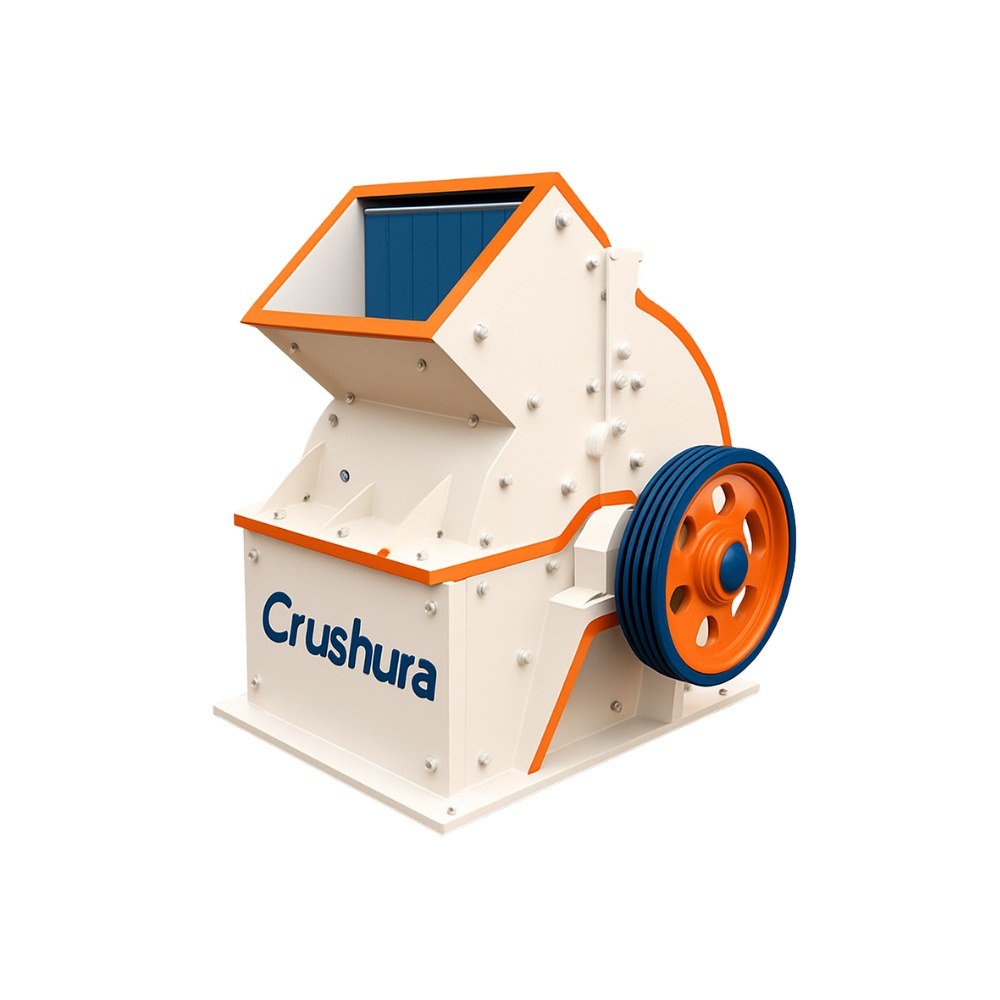
Typical working condition
The application is limestone primary crushing in a cement plant. The machine is a hammer crusher, and it runs three shifts continuously.
For this duty, the wear parts are selected according to the material being crushed and according to the required output. The sections below cover how the parts are chosen, which parts should be reviewed as a group, and how to judge when the hammers are due for replacement.
Hammer material follows the material being crushed
Hammer material is selected according to the material being crushed. High-chromium cast iron, high-manganese steel and wear-resistant composite materials can all be made. For limestone, high-chromium cast iron generally gives the best cost-performance.
Grate bars, grate plates and liners
Grate bars are selected according to the output particle size. Grate plates are made of high-chromium cast iron. Shell liners are made of high-manganese steel.
Parts to look at together on a hammer crusher
A hammer crusher has a set of parts that should be reviewed together:
- Hammers
- Grate bars
- Grate plates
- Liners
- Rotor assembly
- Flywheel
- Hydraulic seals
- Springs
- Bearings
- Motor
- V-belts
- Grease
Two signals for the hammer change point
Two signals on site can be used to judge when the hammers need changing. The first is main motor current that stays high. The second is output particle size that becomes coarser.
If the hammers are run until they are worn through, the grate bars and the rotor are often damaged as well.
If the hammers are run until they are worn through, the grate bars and the rotor are often damaged as well.
Lubrication on a schedule
Lubrication should be carried out on a cycle. On a hammer crusher, the bearings are the place that suffers most from a lack of grease.